When the Last Sparkle Hits Different: The Emotional Power of Macon's End-of-Summer Fireworks
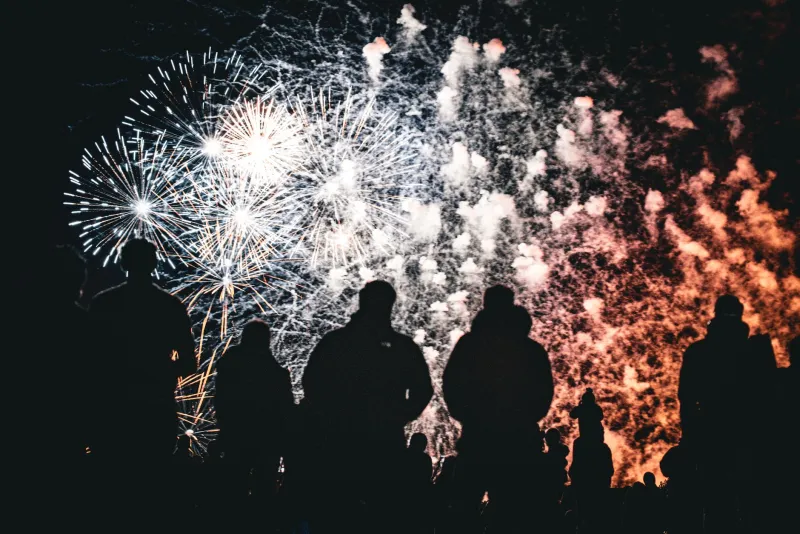
There's a moment — and if you've stood on the banks of the Ocmulgee or spread a blanket out at Central City Park in early September, you probably know it — when the finale explodes overhead and something in your chest does something unexpected. It isn't just the percussion rattling your ribs. It's something quieter underneath all that noise. A kind of sweet, stubborn sadness that no Fourth of July show has ever quite managed to produce.
Labor Day weekend fireworks in Macon are a different animal. And it turns out there are some very real reasons — psychological, social, even atmospheric — why that's the case.
The Crowd Changes Everything
Walk into any Fourth of July show in Middle Georgia and you're shoulder-to-shoulder with half the county. Coolers everywhere, kids shrieking, the whole magnificent chaos of peak summer. It's electric. It's also, let's be honest, a little exhausting.
September is quieter. The families who came out in July have started syncing their calendars to school pickup schedules. The casual attendees have already checked "fireworks" off the summer list. What's left is a crowd of people who genuinely wanted to be there — who made a point of it.
"The Labor Day shows draw a more intentional audience," says Marcus Tillman, who has helped coordinate community events in the Macon area for over a decade. "These aren't people who stumbled into a fireworks show because it was the thing to do. They came because they wanted one more moment of summer. That changes the whole vibe."
Tillman describes the September crowd as more conversational, more present. Less distracted. "People are actually watching the sky," he says with a laugh. "In July, half the crowd is on their phones. In September, everyone's just... there."
Psychology 101: Why Endings Feel Bigger
Dr. Renata Osei, a counseling psychologist based in Warner Robins who works frequently with Macon-area clients, says the emotional weight of end-of-summer events is well-documented in behavioral science.
"Human beings are wired to pay more attention to endings," she explains. "It's called the 'peak-end rule' — we tend to judge an experience based on how it felt at its most intense moment and how it ended. A Labor Day fireworks show is literally framed as a finale. Your brain is already primed to feel it more deeply."
She also points to what psychologists call 'anticipatory nostalgia' — the bittersweet awareness, in the middle of an experience, that it's almost over. "When you're watching September fireworks, part of your mind is already grieving the end of summer. That emotional layer makes everything more vivid. The colors look brighter. The booms feel louder. You're more emotionally present because you know it's almost gone."
For families with school-age kids, that feeling is especially sharp. The backpacks are already packed. The new sneakers are by the door. Labor Day fireworks become, almost involuntarily, a punctuation mark — the period at the end of a long, golden sentence.
The Weather Cooperates in Ways July Never Does
Here's a practical truth that any Middle Georgian will confirm without hesitation: September is just more comfortable. The brutal, breath-stealing humidity of July and August has started to loosen its grip. Evening temperatures in Macon can dip into the low 70s by Labor Day weekend, which means people linger. They stay on their blankets longer. They stick around after the finale instead of racing to their cars.
That extended presence matters. Post-show conversations happen. Strangers share leftover potato salad. Kids catch fireflies in the dying light while their parents sit and actually talk to each other.
"The weather makes September shows feel more communal," says Tillman. "In July, as soon as it's over, people are gone. In September, the night invites you to stay."
The sky itself behaves differently, too. With less atmospheric haze than the height of summer, fireworks in early fall often appear crisper and more defined against the dark. The colors — particularly the deep reds and blues — tend to hold their shape longer before dispersing. It's a small thing, but it adds to the sense that you're seeing something more deliberate, more considered.
What Organizers Know That Audiences Don't
There's a behind-the-scenes reality to September shows that most attendees never think about: the productions are often designed differently. With smaller expected crowds and more modest budgets than July 4th spectaculars, Labor Day shows tend to be tighter, more curated. Less about sheer volume, more about pacing and emotional arc.
"We have more creative freedom in September, honestly," says one local pyrotechnics coordinator who has worked events throughout Middle Georgia for years and asked not to be named. "The July shows are about spectacle — go big, go loud, give the crowd what they came for. September lets us slow down a little. We can build a narrative. We can let a moment breathe."
That curatorial approach shows. Attendees at end-of-summer shows frequently describe them as feeling more "personal" or "intentional" — words you rarely hear applied to the Fourth of July. It's the difference between a blockbuster and an indie film. Both can be great. But one of them tends to stick with you longer.
The Transition Ritual We Didn't Know We Needed
Culturally, Americans have always used celebrations to mark transitions. Graduations, New Year's Eve, retirement parties — we instinctively reach for ritual when something is ending. Labor Day fireworks, whether communities explicitly frame them this way or not, serve that same function.
"There's real psychological value in having a communal marker for seasonal change," Dr. Osei says. "It gives people permission to feel the transition rather than just wake up one morning and realize summer is over. A shared experience — especially one as visceral as fireworks — creates a collective memory that helps people process change."
In Macon, that processing has a particular texture. Middle Georgia summers are intense — long, hot, and full of the kind of outdoor living that just doesn't happen the same way in January. When September rolls in and the light starts slanting differently through the pecan trees, there's a collective exhale. A fireworks show at the end of it all is less a celebration than a ceremony.
One Last Boom Before the Season Sleeps
If you've never made the deliberate choice to attend a Labor Day weekend fireworks event in Middle Georgia — to treat it as something worth showing up for rather than a default summer activity — consider this your nudge.
Bring a blanket. Bring people you actually want to sit with. Get there early enough to watch the sky turn from orange to purple to black. And when that finale comes — when the shells stack on top of each other and the crowd forgets to breathe — let yourself feel whatever it brings up.
Because here's the thing about September fireworks in Macon: they don't just light up the sky. They light up something in you. Something that knows, without being told, that this is the good part — and that good parts, by their nature, don't last forever.
That's not a reason to be sad. That's a reason to look up.