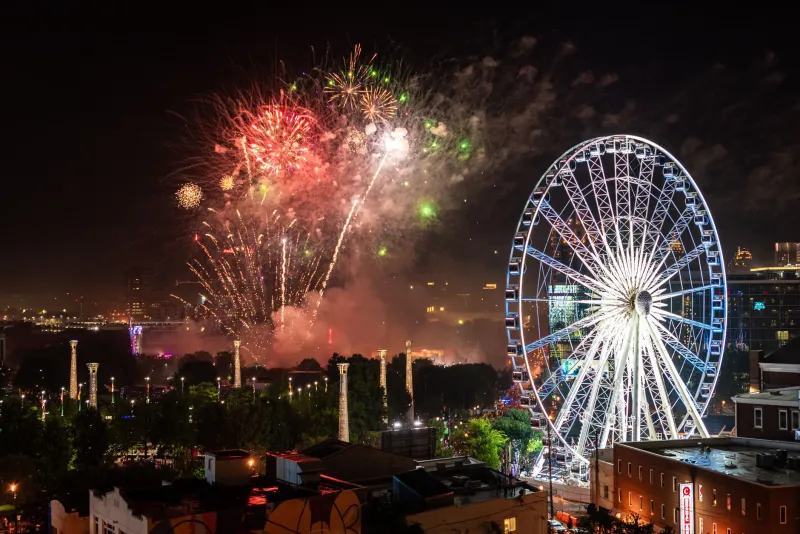
Two Kinds of Magic: When Fireflies and Fireworks Share the Same Macon Sky
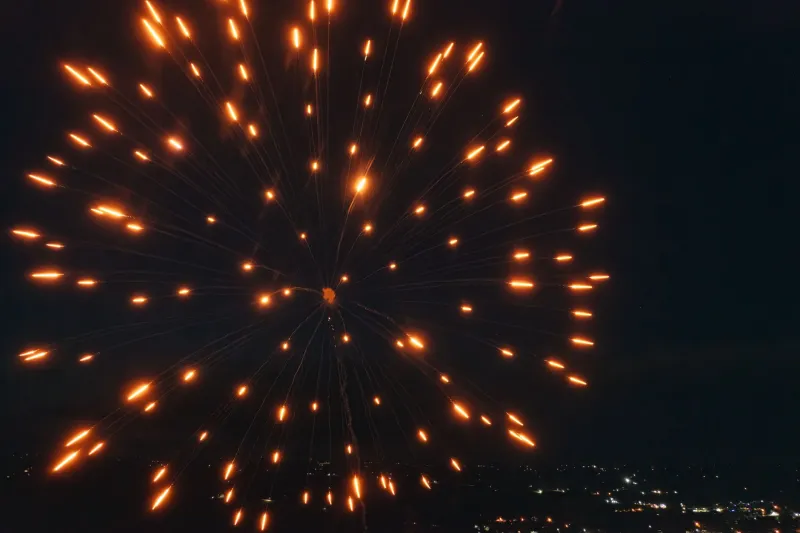
There's a particular kind of evening in Middle Georgia — usually somewhere between late May and mid-July — where the air gets thick and warm right after sunset, the grass smells like it just finished a long exhale, and then it starts. First one flicker near the tree line. Then another. Then suddenly the whole yard is blinking like someone strung up a thousand tiny Christmas lights and handed them to the wind.
Fireflies. And if the calendar lines up just right, a fireworks show somewhere in the distance.
For Macon residents, this overlap isn't unusual. It's actually one of those quiet, overlooked gifts of living in Middle Georgia — a place where the natural world and the human-made spectacle occasionally share the same stage. But most of us have never really stopped to think about what's actually happening out there in the dark, or why both of these light shows hit us the same way emotionally even though they couldn't be more different scientifically.
We decided it was time to dig in.
What's Actually Happening When a Firefly Lights Up
Dr. Lena Forsythe, an entomologist who teaches at a university in the Macon area and has spent years studying Georgia's insect populations, describes firefly bioluminescence as one of the most elegant chemical reactions in the natural world.
"It's a reaction between a compound called luciferin and an enzyme called luciferase," she explains. "Oxygen plays a role too. The firefly controls the flash by regulating airflow into a specialized organ in its abdomen. The whole thing is remarkably efficient — nearly 100 percent of the energy produced becomes light, with almost no heat wasted."
Compare that to a fireworks shell, which generates enormous amounts of heat and sound alongside its visual display, and you start to appreciate just how quietly brilliant a firefly actually is. Fireworks are theatrical. Fireflies are surgical.
But here's where it gets interesting for Middle Georgia specifically. Georgia is home to somewhere between 50 and 60 species of fireflies, depending on which entomologist you ask. The Piedmont region — which includes the Macon area — supports a particularly rich diversity of species because of its mix of forested land, open meadows, and river bottomland. Different species flash in different rhythms and colors, creating what naturalists sometimes call a "light conversation" happening across an entire landscape.
"People think fireflies are all the same," says Marcus Teel, a naturalist and outdoor educator who leads firefly walks in the Middle Georgia area each summer. "But if you sit quietly and watch for a while, you start to notice patterns. Some species do a single long pulse. Others do a rapid double flash. Some fly low to the ground, others stay up in the canopy. It's a whole ecosystem of signals happening simultaneously."
Why Both Phenomena Hit the Same Emotional Nerve
Ask anyone why they love fireworks and you'll probably get an answer that involves words like "awe," "wonder," and "excitement." Ask someone to describe a field full of fireflies and you'll hear almost the same vocabulary — just quieter.
That's not a coincidence, according to Forsythe.
"Both experiences trigger what researchers sometimes call the 'awe response,'" she says. "It's that feeling of being small in a beautiful way, of encountering something larger than yourself. Fireworks do it through scale and sound and color. Fireflies do it through intimacy and repetition — this slow, patient blinking that surrounds you completely."
There's also something to be said about light in darkness as a universal human draw. We are wired, evolutionarily speaking, to pay attention to light sources in the dark. Both fireflies and fireworks exploit that wiring, just through completely different means.
Fireworks demand your attention. Fireflies reward your patience.
The Macon Window: When Both Shows Overlap
Here's the practical part for anyone who wants to experience both in the same night. In Middle Georgia, peak firefly activity typically runs from late May through early July, with the sweet spot often landing in June. Fireworks season, of course, ramps up around Memorial Day and peaks hard around the Fourth of July.
That overlap — roughly June through early July — is your window.
Teel recommends heading to lower-elevation areas near water if you want maximum firefly density. "The river bottoms and creek edges around Macon are incredible," he says. "Areas near the Ocmulgee River, spots out toward Lake Tobesofkee, even some of the older neighborhoods with big mature trees and natural understory — you can find fireflies in places people don't expect."
The trick, he adds, is timing. Fireflies tend to be most active in the first hour or two after sunset, which also happens to be prime fireworks-watching time. Find a spot with a clear view of the sky but natural green space around you, and you might get both shows running simultaneously.
"I've had that experience a few times," Teel says with a grin. "You've got fireworks going off over the treeline, and right at eye level the field is just alive with fireflies. It's genuinely one of the most beautiful things I've ever seen, and it doesn't cost a thing."
Is This Experience Unique to Macon?
Short answer: kind of, yeah.
Fireflies exist across the southeastern United States, but the specific combination of habitat diversity, urban-natural edge environments, and the density of summer celebrations that Macon offers creates something that's harder to replicate in a big city or a purely rural setting. You need both — the infrastructure for public fireworks and the green space for fireflies — and Macon threads that needle reasonably well.
Forsythe also points out that firefly populations are declining in many parts of the country due to light pollution, habitat loss, and pesticide use. Middle Georgia's mix of developed and undeveloped land has, so far, helped protect local populations. "We're lucky here," she says. "Some places that used to have incredible firefly displays just don't anymore. People in Macon should genuinely appreciate what they have."
How to Make the Most of It
If you want to turn this into an actual summer evening rather than a happy accident, here are a few practical tips:
- Go dark. Minimize your phone screen and flashlight use for at least 20 minutes before you start watching fireflies. Your eyes need time to adjust, and artificial light disrupts the fireflies' signaling.
- Find the edge. Fireflies love the transition zones between open areas and tree cover. A park with both a clearing and a wooded border is ideal.
- Don't rush. Unlike fireworks, which announce themselves loudly, fireflies reveal themselves gradually. Give it time.
- Bring something to sit on. The best firefly viewing happens when you're comfortable enough to stay still for a while.
- Check the fireworks calendar. Fireworks Macon keeps a running list of local shows throughout the summer — plan a night that combines a show you can see from a distance with a natural spot nearby.
The Bigger Picture
What makes this whole thing worth writing about isn't just the novelty of two light shows happening at once. It's what that combination says about Macon as a place. This is a city that knows how to celebrate loudly — the fireworks are proof of that. But it's also a region with enough breathing room, enough green space, and enough living wild things to remind you that the universe was putting on light shows long before humans ever figured out gunpowder.
Sitting in a field outside Macon on a warm June night, watching fireflies blink their patient little signals while something explodes in gold and red above the treeline, feels like a very specific kind of luck.
Don't take it for granted.