Heat, Humidity, and High-Altitude Color: What Middle Georgia's Weather Does to a Fireworks Show
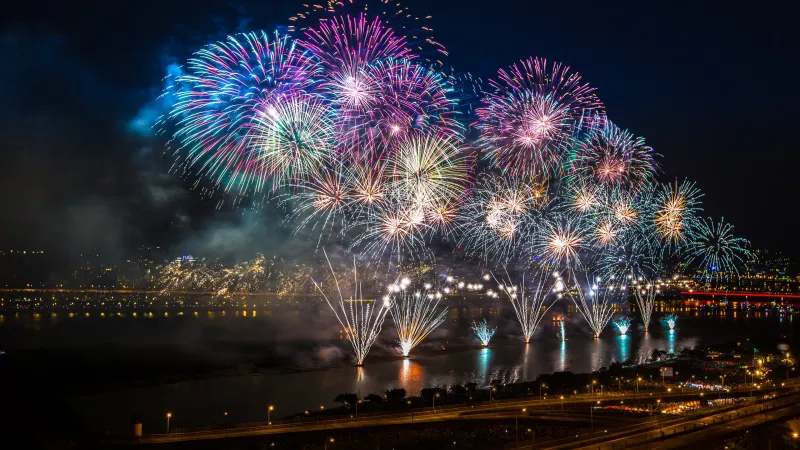
Photo: fireworks display humid summer night southern sky colorful smoke, via cdn.wallpapersafari.com
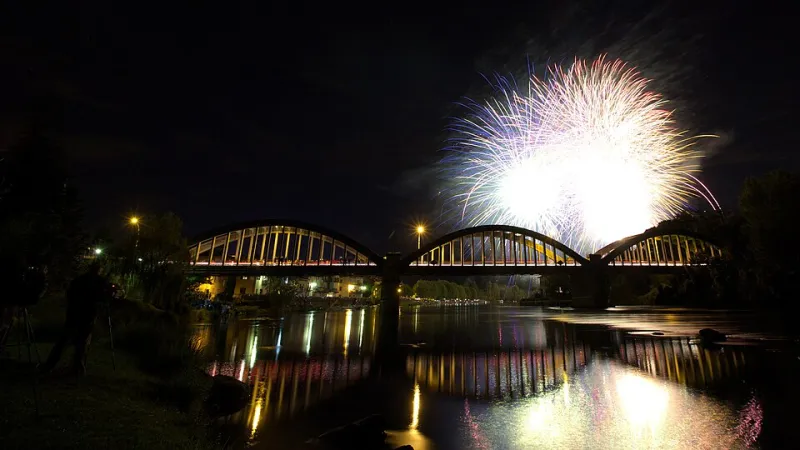
You've probably noticed it without ever putting a name to it. You're standing on the lawn at Tattnall Square Park or crowding a riverbank downtown, and the fireworks look... different than the ones you saw on TV from Chicago or New York. The colors bleed a little at the edges. The booms roll differently across the sky. The smoke hangs around like it's in no hurry to leave.
That's not your imagination. Middle Georgia's climate is doing real, measurable things to every shell that goes up over Macon — and the people lighting those fuses know it better than anyone.
Why Humidity Is the Wildcard Nobody Talks About
Macon sits in a humid subtropical climate zone, which is a fancy way of saying it's hot, it's wet, and the air is heavy with moisture for a good chunk of the year. Average summer humidity in Middle Georgia regularly pushes past 70 percent, and on some July evenings, it feels like the air itself is sweating.
That moisture doesn't just make spectators uncomfortable. It interferes with the chemical reactions happening hundreds of feet above their heads.
Fireworks get their colors from metal salts packed into the shell's star composition. Strontium burns red. Barium produces green. Copper compounds give you blue — one of the trickiest colors to achieve cleanly even under ideal conditions. When those compounds ignite, they're supposed to emit light at very specific wavelengths. But humid air scatters that light before it fully reaches your eyes, softening edges and sometimes muddying colors that should pop with sharp clarity.
Blue is the biggest casualty. Pyrotechnicians across the country will tell you that blue fireworks are notoriously finicky, and in high-humidity environments like Macon's summer nights, they can look more violet or even gray if conditions aren't cooperating. It's not a failure of the product — it's atmospheric interference, plain and simple.
Sound Travels Differently Here, Too
Ask anyone who's experienced a fireworks show in a dry desert climate versus a muggy Southern evening, and they'll often describe the sound differently. That's not just perception.
Sound waves travel faster through warm, humid air than through cool, dry air. In Macon's summer heat, that means the concussive boom from a shell can reach your ears more quickly — and with slightly different resonance — than it would in, say, Phoenix in October. The city's geography plays a role as well. Macon's rolling terrain and the Ocmulgee River corridor create natural channels where sound bounces and builds, giving large-scale shows that signature rumble that seems to come from everywhere at once.
Local pyrotechnicians say they factor this in when designing shows near the river. The echo effect can actually be used creatively — timing shells so that the natural delay from reflected sound creates a layered audio experience that feels bigger than the show technically is.
The Seasonal Shift: Why Fall Shows Hit Different
Here's something Macon regulars have probably felt but never fully understood: fireworks displays in September and October just seem crisper. The colors look more saturated. The effects feel more precise.
There's real science behind that impression. As Middle Georgia's brutal summer humidity finally starts to ease up in early fall, the atmosphere becomes more transparent. Light scatters less. Colors arrive at your eyes closer to their true chemical hue. The same shell composition that looked a little washed out in a July haze can look absolutely vivid on a clear October night.
Temperature also affects how shells perform on the way up. Extremely high ambient temperatures can alter the burn rate of propellant charges, occasionally causing shells to break at slightly different altitudes than intended. Experienced pyrotechnicians compensate by adjusting lift charges and timing sequences — small tweaks that keep the show looking intentional even when the Georgia heat is being uncooperative.
What the Forecasters Are Watching
It's not just the pyrotechnicians paying close attention to weather data before a Macon show. Meteorologists who cover Middle Georgia say fireworks events are one of the few times the general public starts asking genuinely technical questions about atmospheric conditions.
Wind direction and speed at multiple altitudes matter enormously. A strong upper-level wind can push smoke from early shells directly into the path of later ones, creating a gray curtain that obscures the finale. Pyrotechnic crews coordinate with weather services ahead of major shows to get altitude-specific wind readings — not just surface conditions — so they can angle mortars accordingly and minimize the smoke drift problem.
A temperature inversion, which happens fairly regularly in Middle Georgia during transitional seasons, traps a layer of warm air near the surface. That can hold smoke low and thick, turning a beautiful display into a frustrating game of peek-a-boo for ground-level spectators. Crews who know the local atmosphere learn to read the signs and adjust shell trajectories to push effects higher above the inversion layer when possible.
The Local Advantage
All of this might sound like fireworks in Macon are fighting an uphill battle against the climate. But experienced local crews see it differently. They've spent years learning exactly how Middle Georgia's air behaves, and that knowledge becomes a genuine competitive advantage.
A pyrotechnician who's designed shows in Macon for years develops instincts that no textbook can fully teach — when to push effects higher, which shell compositions hold their color best in humid conditions, how to sequence a finale so the smoke doesn't kill the last impression. That accumulated local knowledge is part of why Macon's biggest shows have a character that feels specific to this place.
The climate isn't just a challenge to work around. In a lot of ways, it's become part of the show itself — shaping the soft halos around bursts on a muggy summer night, giving the thunder of a shell that particular rolling quality as it crosses the river, and making those crisp fall displays feel like a reward after a long, sweaty season.
Next time you're watching the sky light up over Middle Georgia, take a second to appreciate the invisible layer of science happening between the shell and your eyes. Macon's air is doing its own thing up there — and the people behind the shows have learned to work with it, not against it.