Middle Georgia on the Map: How Fireworks Are Turning Macon Into a Must-Visit Destination
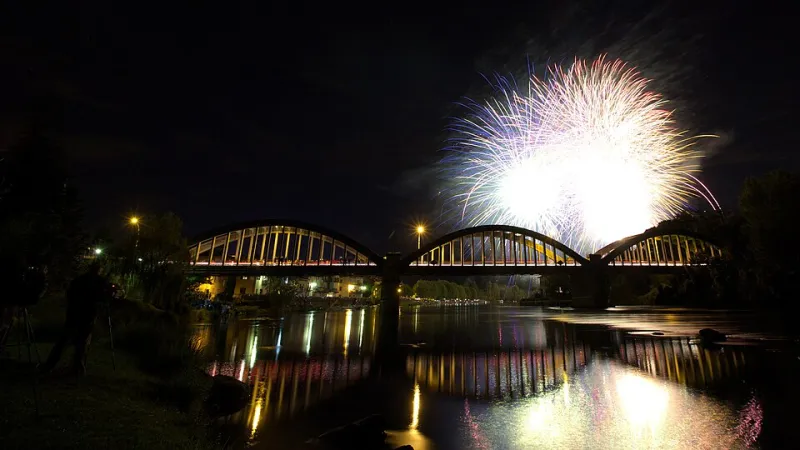
Photo: Andrea Pagani, CC BY-SA 3.0, via Wikimedia Commons
For most of its history, Macon has sold itself to visitors on music, history, and those jaw-dropping cherry blossoms every spring. But lately, something else is pulling people off I-75 and into the heart of Middle Georgia — the kind of something that lights up the sky and rattles your chest. Fireworks tourism is a real thing, and Macon is quietly becoming one of the Southeast's premier destinations for it.
It might sound niche. But spend five minutes talking to the front desk staff at a downtown hotel on the Fourth of July weekend, and you'll get the full picture pretty fast.
"We Book Out Months in Advance Now"
Ask around at hotels within a few miles of the riverfront and you'll hear the same story: rooms that used to sit half-empty during late June and early July are now filling up weeks — sometimes months — ahead of time. One manager at a midtown property said she started noticing the shift a few years back when she began getting calls from guests in Alabama and South Carolina specifically asking about event schedules before they'd even check availability.
"They're not booking around when they can get a room," she said. "They're booking around when the shows are."
That's a meaningful flip in how hospitality works. Traditionally, hotels set their rates and availability and visitors work around them. Increasingly, Macon's fireworks calendar is the anchor point, and everything else — travel plans, hotel stays, dinner reservations — gets built around it.
The economic ripple is real. A single large-scale display on the Fourth of July doesn't just bring in the folks who live ten minutes away. It draws families from Columbus, day-trippers from Atlanta who decide to stay the night, and dedicated pyro-enthusiasts who track major shows the way some people follow music festivals.
The Celebration Seeker Is a New Kind of Traveler
Travel researchers have started paying attention to what they loosely call "experience tourism" — the idea that more and more Americans are choosing destinations based on a specific event or moment rather than a general bucket list. Fireworks fit that mold perfectly. They're time-specific, visually spectacular, and impossible to replicate on a screen. You can watch a YouTube video of a fireworks show, but you can't feel the concussion in your sternum or smell the smoke drifting over the river.
Take a family from Dothan, Alabama who made the drive to Macon last summer specifically for a Fourth of July display. The dad had heard about the show from a coworker and spent about two weeks researching viewing spots online before they committed to the trip. They stayed two nights, ate at three different local restaurants, and hit a couple of Macon's historic sites while they were in town.
"We didn't come for the history," he admitted with a laugh. "But we ended up loving it. The fireworks were the reason we came. Everything else was a bonus."
That bonus effect is exactly what local tourism advocates are starting to talk about more seriously. When a fireworks show brings someone to town for the first time, it's not just a ticket to a display — it's an introduction to Macon. And first impressions in this city have a way of sticking.
Local Businesses Are Starting to Connect the Dots
Restaurants near popular viewing areas have gotten smarter about event weekends. Some now offer prix-fixe menus or extended outdoor seating specifically for fireworks nights. A few bars along the downtown corridor have started promoting rooftop viewing packages. It's not quite the organized infrastructure you'd see in a city that's been leaning into event tourism for decades, but the pieces are starting to come together.
Food truck operators have been some of the quickest to adapt. Positioning near high-traffic viewing zones on major fireworks nights has become a legitimate business strategy for several local vendors, some of whom say event nights account for a disproportionate chunk of their summer revenue.
Retail is getting in on it too. Specialty shops near the riverfront have reported upticks in souvenir sales and general foot traffic on display weekends. The connection between a fireworks show and a broader economic ecosystem is becoming harder to ignore.
What Makes Macon's Shows Different
So why Macon specifically? Plenty of cities do fireworks. What makes Middle Georgia worth a road trip?
Part of it is geography. The Ocmulgee River provides a natural backdrop that gives Macon's waterfront displays a visual depth you just don't get in every city. Reflections on the water, the tree lines on both banks, the way sound travels across open water — it all adds up to an experience that feels more cinematic than your average municipal show.
Part of it is also community character. Macon doesn't do things small. There's a genuine enthusiasm here — in the crowds, in the way locals treat out-of-towners, in the overall energy of a celebration night downtown — that visitors pick up on immediately. It's infectious in the best possible way.
And part of it, honestly, is that word is getting out. Social media posts from previous shows have a way of planting seeds. Someone in Augusta sees a video, saves it, and files it away under "next summer." That's how fireworks tourism grows — one spectacular night at a time.
The Road Ahead
Macon isn't Nashville or Savannah in terms of tourism infrastructure, and that's not necessarily a bad thing. There's something refreshing about a destination that hasn't been over-packaged. But if the trend continues — and the hotel bookings and restaurant receipts suggest it will — the city may want to start thinking more intentionally about how it markets these events to regional visitors.
A coordinated calendar, clearer communication about viewing locations, and a little more hospitality infrastructure around major display nights could go a long way toward turning occasional visitors into repeat guests. The foundation is already there. The sky, quite literally, is the limit.