Boom Town: How Macon's Love Affair with Fireworks Has Lit Up the Sky for Generations
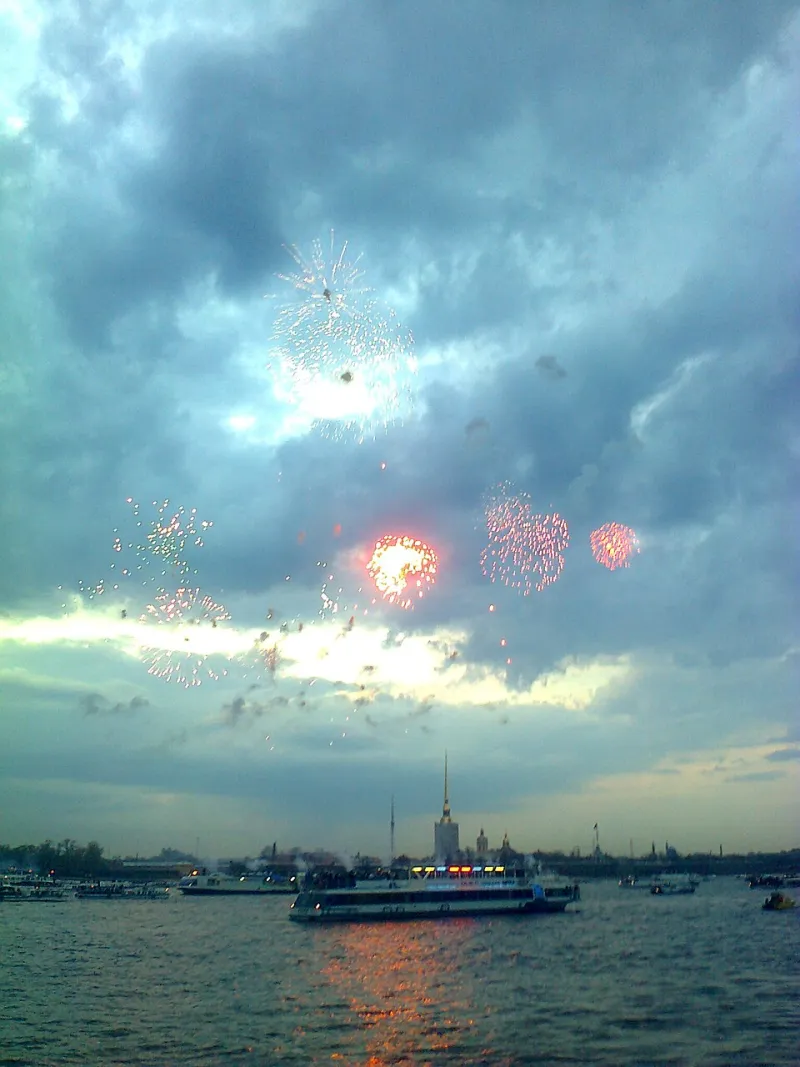
Photo: Serge Kutuzov serge_k, CC0, via Wikimedia Commons
Ask anyone who grew up in Macon about their earliest fireworks memory and you'll get one of two answers: either a wide front yard somewhere off Riverside Drive, sparklers still warm in their hands, or a crowd so thick at Central City Park that you watched the whole show from your dad's shoulders because you couldn't see anything else. Both versions are true. Both versions are Macon.
The way a city celebrates says something real about who it is. And over the past five decades or so, the way Macon has lit up the sky has changed in ways both big and small — while somehow managing to feel exactly the same at its core.
The Early Days: Neighborhood Fireworks and Front-Porch Patriotism
For much of the 1960s and 1970s, Macon's Fourth of July looked a lot like the rest of small-town and mid-size city America: decentralized, informal, and deeply personal. Consumer fireworks were widely available, and it wasn't unusual for entire blocks to transform into impromptu celebrations, with neighbors pooling their purchases and setting things off from driveways and vacant lots.
Long-time Macon resident Dorothy Walcott, who grew up near Ingleside Avenue, remembers those summers vividly. "It wasn't organized the way it is now," she says. "It was just everybody outside. You'd hear something go off three streets over and everybody would just sort of migrate toward it. The whole neighborhood would end up in one yard by the end of the night."
That grassroots quality defined the era. There were no jumbotrons, no synchronized music, no professionally choreographed finales. Just the raw, democratic joy of people making noise together in the Georgia heat.
The Rise of Community Showcases
By the 1980s, Macon began shifting toward more organized, centralized celebrations. Civic organizations, local businesses, and eventually city government started pooling resources to produce displays that felt genuinely large-scale. Central City Park emerged as the natural anchor for these gatherings — its open acreage could accommodate the crowds that were starting to show up, and its position made it accessible from multiple parts of the city.
This era also saw fireworks become more tightly woven into Macon's broader festival calendar. The Cherry Blossom Festival, which exploded in popularity through the 1980s and became one of the most recognized spring celebrations in the Southeast, helped establish Macon's identity as a city that knew how to throw a party. While the Cherry Blossom Festival is a spring event centered on the city's famous Yoshino cherry trees rather than fireworks specifically, its success created an infrastructure — vendor relationships, volunteer networks, crowd management experience — that made summer celebrations more ambitious.
"Once people saw that Macon could pull off something like Cherry Blossom at that scale," says local historian and Mercer University alum James Treadwell, "there was a real sense that we could do anything. The bar went up for everything."
Mercer University and the Stadium Experience
Mercer University's campus has served as both backdrop and venue for various community celebrations over the years, and Luther Williams Field — the historic baseball stadium that sits just outside downtown — has hosted its share of fireworks-adjacent events. There's something particularly resonant about fireworks over a ballpark: the open sky, the sightlines, the way the crowd naturally orients itself for a shared experience.
For Macon residents who grew up going to Macon Braves games in the 1980s and 1990s, the memory of post-game fireworks on warm summer nights is inseparable from their sense of the city. It was one of those experiences that felt simultaneously like entertainment and like belonging — proof that you were part of something.
The Ocmulgee Heritage Trail: A New Stage for an Old Tradition
The development of the Ocmulgee Heritage Trail over the past couple of decades has given Macon's fireworks culture a genuinely beautiful new venue. The trail winds along the Ocmulgee River, connecting green spaces and offering views of the water that most residents had never really experienced before its development.
For fireworks purposes, the riverfront has proven to be something close to ideal. The open sky, the water's reflective surface, and the natural separation from vehicle traffic create a viewing environment that feels both festive and peaceful — a combination that's harder to achieve than it sounds.
Local photographer and longtime Macon resident Marcus Hines has spent several Fourth of July evenings documenting celebrations along the trail. "The light on the water when a big burst goes off — there's nothing like it," he says. "I've photographed fireworks in Atlanta, in Savannah. The Ocmulgee on a clear July night is honestly right there with any of them."
Backyard Traditions That Never Went Away
For all the evolution of Macon's organized celebrations, the backyard sparkler tradition has proven remarkably durable. Consumer fireworks laws in Georgia have shifted over the years, and while regulations vary and enforcement has fluctuated, the ritual of families gathering in yards with boxes of purchased fireworks remains a living part of the culture.
There's a generational quality to these gatherings that no stadium show can quite replicate. Grandparents light sparklers for grandchildren the same way they lit them for their own kids thirty years ago. The specific smell of a spent sparkler — that sharp, metallic tang — is the kind of sensory memory that bypasses the brain entirely and goes straight to something deeper.
"My grandmother used to save coffee cans to stick the used sparklers in," recalls Bibb County native Keisha Monroe. "I do the exact same thing now with my kids. I don't even think about it. It's just what you do."
What the Next Chapter Looks Like
Macon, like most American cities, is watching the fireworks landscape evolve in real time. Drone light shows have begun appearing at major events nationwide, offering a quieter, more environmentally controlled alternative to traditional pyrotechnics. Some cities have started blending the two — traditional fireworks for the visceral, chest-thumping experience, drone formations for the precision and novelty.
Whether Macon goes that direction in coming years remains to be seen. But the community's appetite for celebration — the genuine, unself-conscious desire to gather outside and look up at something together — seems as strong as it's ever been.
The technology changes. The venues shift. The crowds get bigger or smaller depending on the year. But the impulse that sends people out onto their lawns and down to the riverfront on a July night in middle Georgia? That part doesn't seem to be going anywhere.
And honestly, that's the whole story.