Why Blue Is the Hardest Color in the Sky: The Chemistry Behind Middle Georgia's Fireworks Palette

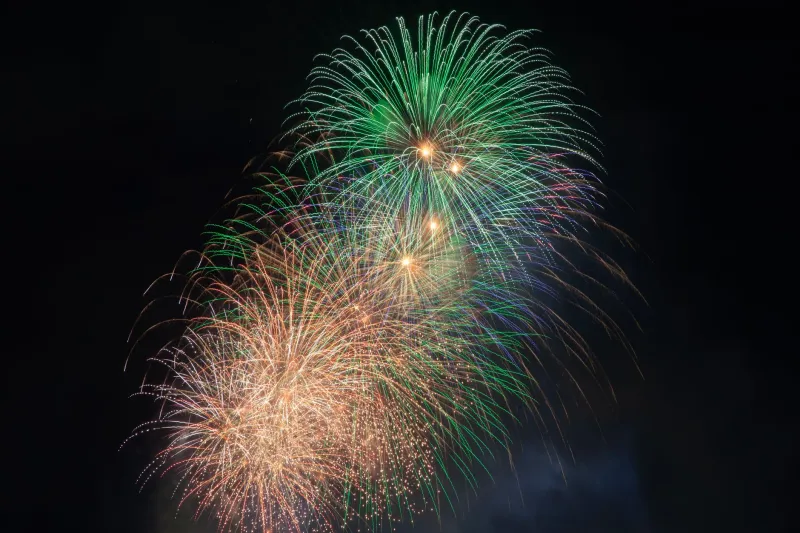
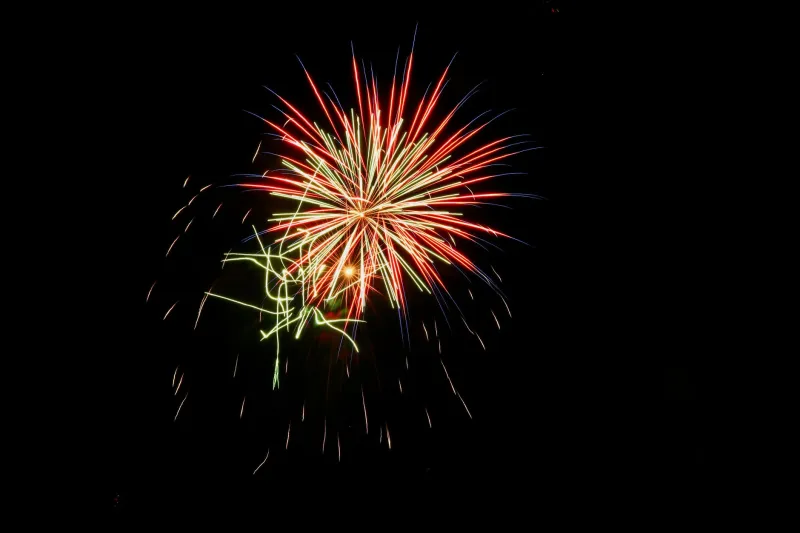
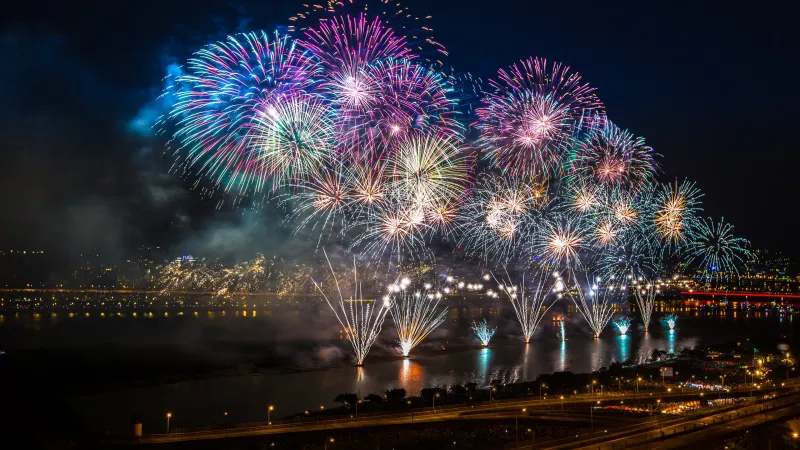
Every summer, Macon residents tilt their heads back and watch the sky erupt in red, gold, green, and white. It looks effortless — a perfectly choreographed burst of color that hangs in the humid Georgia air for just long enough to make you gasp. But talk to the people who actually build these displays, and you'll hear a different story. Some of those colors? They're fighting the environment every single second they're airborne.
The science of fireworks color is, at its core, a chemistry problem. And in Middle Georgia, that chemistry gets a whole lot more complicated the moment summer arrives and the humidity starts climbing.
It Starts With Metal Salts
To understand why certain colors are harder to produce here than in, say, Colorado or New Mexico, you first have to understand how fireworks get their color in the first place. The answer isn't dye or paint — it's metal salts, and the way those compounds behave when they're burned.
When a pyrotechnic star (the tiny pellet inside a firework shell that produces color) ignites, it heats specific metal compounds to the point where their electrons get excited and jump to higher energy levels. When those electrons fall back down, they release energy as light. Different metals release light at different wavelengths, which translates to different colors. Strontium salts produce red. Barium compounds give you green. Copper compounds create blue. Sodium makes yellow. Magnesium and aluminum burn bright white.
Simple enough, right? Except the real world — especially the real world in the middle of a Georgia summer — doesn't behave like a chemistry classroom.
Humidity Is the Enemy
Macon's average relative humidity in July hovers around 70 to 80 percent on most evenings. For humans, that means a sweaty, uncomfortable night. For fireworks, it means the chemical compounds inside those stars are absorbing moisture from the air before they even get a chance to burn.
"Moisture is a pyrotechnician's nightmare," says one Middle Georgia display coordinator who has worked shows across the region for over two decades. "It doesn't just affect how the stars burn — it affects the consistency of the burn. You can end up with colors that look washed out, or stars that sputter when they should be blazing."
The problem is particularly acute for blue fireworks. Copper chloride, the compound most commonly used to produce blue, is notoriously sensitive to humidity. At high temperatures, it burns a vivid, saturated blue. But copper chloride is also hygroscopic, meaning it readily absorbs water from the surrounding air. When that happens, the compound can degrade before it fully combusts, producing a color that reads more as a pale, grayish-blue or even a greenish tint rather than the deep, electric blue you'd see under ideal conditions.
"Blue is the white whale of fireworks," explains a chemist at a Georgia university who consults informally with regional pyrotechnics companies. "Every manufacturer is chasing a better blue. The compound works beautifully in a controlled lab setting, but the moment you introduce real-world variables — humidity, temperature fluctuation, altitude — it gets unpredictable. In a place like Macon in July, you're stacking every challenge on top of each other."
Red Isn't as Easy as It Looks, Either
You might assume red would be a safe bet — after all, strontium-based reds are among the most common colors in any display. And while red is generally more stable than blue, achieving a truly deep, saturated crimson in humid conditions still requires careful formulation.
The issue is that moisture in the air can scatter and diffuse the light emitted by burning stars, softening what should be a punchy, bold red into something that looks more orange or pinkish from a distance. Display crews in Middle Georgia often compensate by using higher concentrations of strontium carbonate in their star formulas, or by selecting shell sizes that burn hotter and faster — reducing the window during which humidity can interfere.
"You learn the quirks of your geography," says the same display coordinator. "What works great for a show in Phoenix doesn't necessarily translate to a show in Macon. We adjust. You have to."
Why Gold and White Tend to Pop
If blue and deep red are the troublemakers, gold and white are the reliable workhorses of a Middle Georgia sky show — and there's a chemical reason for that, too.
Gold effects are typically produced by charcoal-based or iron-based compounds, which burn at extremely high temperatures and are far less sensitive to ambient moisture. White and silver effects rely on magnesium or aluminum, metals that combust so intensely that a little extra humidity barely registers. These are the colors you can count on to look spectacular even on a muggy July night over the Ocmulgee River.
"When I'm designing a show for this region, I think about the climate as part of the palette," says the university chemist. "You lean into what works here. A well-designed Georgia show might use blue sparingly — as an accent, a surprise — rather than a dominant color. That's not a limitation so much as it's smart design."
What Macon Residents Are Actually Seeing
So the next time you're spread out on a blanket at Tattnall Square Park or crowded onto a riverfront overlook watching shells burst overhead, here's something worth knowing: that fleeting blue streak you spot for half a second? Someone worked hard to put it there, and the Georgia air did its best to stop them.
The brilliant golds cascading down like a weeping willow? Those are the chemistry of high-temperature metal combustion doing exactly what it's supposed to do in exactly the right environment. The deep greens? Barium is more cooperative than copper, so those tend to hold up better in humidity. The whites that seem to leave a ghost image burned into your vision for a second after they fade? Pure magnesium, laughing at the weather.
Every color you see is a small victory — a pyrotechnician's formula winning a brief argument with physics and climate. Middle Georgia's summer atmosphere doesn't make it easy. But the people building these displays have been working with this geography long enough to know how to work around it, or straight through it.
The Ongoing Science
Manufacturers haven't given up on cracking the humidity problem entirely. Newer formulations using encapsulated copper compounds — essentially wrapping the reactive chemical in a moisture-resistant coating until the moment of combustion — have shown promise in field tests. Some display companies are experimenting with composite stars that ignite faster, reducing the exposure window between launch and burn.
Whether those advances will eventually make a true, vivid blue as reliable as gold over Macon's skyline remains to be seen. For now, it's still something of a minor miracle when it works.
And honestly? That makes it worth watching for.