The Hidden Maestros: Inside the Art of Syncing Macon's Fireworks to Music
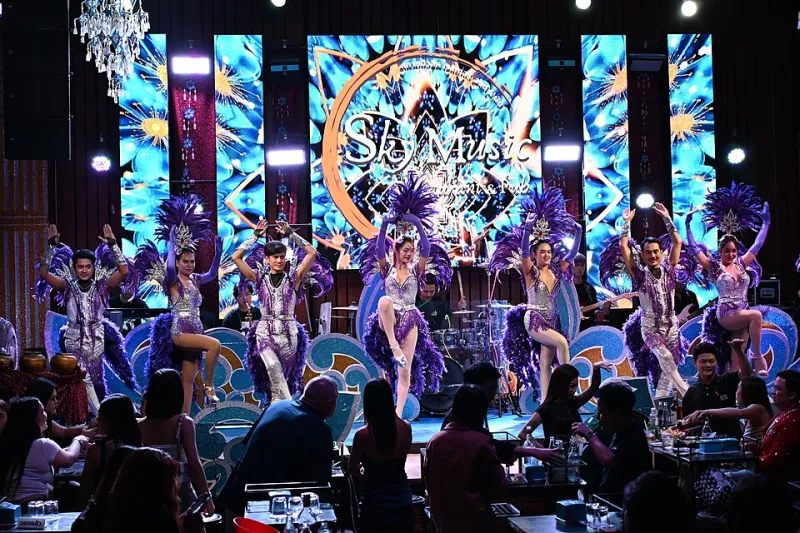
Photo: PattayaPatrol, CC BY-SA 4.0, via Wikimedia Commons
Close your eyes and think about the best fireworks show you've ever seen.
Chances are, there was music. And chances are, you didn't fully realize how much that music was doing — how it was pulling you into the moment, building tension before a big burst, releasing it right when the sky went white. You just felt it.
That feeling is manufactured. Deliberately, painstakingly, brilliantly manufactured.
Behind every great synchronized fireworks display is a small team of obsessives who have spent weeks — sometimes months — mapping every shell to every beat, every color to every chord change. In Macon, where community celebrations have become increasingly sophisticated over the years, that craft is alive and well. We went looking for the people doing it, and what we found was equal parts art school and rocket science.
It Starts Long Before Anyone Strikes a Match
For most people, a fireworks show begins when the first shell streaks into the sky. For the teams who build these displays, it begins with a playlist and a blank timeline.
"The music is everything," said one local pyrotechnician who has designed shows for events throughout Middle Georgia for nearly fifteen years. "You don't build the show and then find music to fit it. You find the music first, and then you build the show around it like a puzzle."
That process starts with what the industry calls a "cue sheet" — a detailed, second-by-second breakdown of the musical score, annotated with emotional beats, tempo shifts, key changes, and moments of silence. Every one of those moments is a potential cue for a shell.
"I'll listen to a piece of music fifty times before I even think about what goes where," he explained. "You have to know it like you wrote it. When does the energy drop? When does it surge? Where's the moment the crowd is going to gasp — and what do I want them to see when they do?"
The Software Behind the Spectacle
Gone are the days when a pyrotechnician stood at a firing panel with a clipboard and a prayer. Modern synchronized shows rely on sophisticated software platforms — names like Finale 3D, PyroSim, and ShowSim come up frequently in the industry — that allow designers to build virtual simulations of their shows before a single shell is ever loaded.
These programs let you drop shells onto a digital timeline synced to an audio track, visualize how different effects will look from the audience's perspective, and calculate the precise delay needed to account for the time it takes a shell to climb to its burst altitude.
That last part is trickier than it sounds.
"People think you just push the button and it explodes on the beat," said a sound engineer who has worked alongside pyrotechnic crews on several large Macon-area events. "But a four-inch shell might take two seconds to reach its burst height. A six-inch shell might take three. So if you want the burst to happen on beat four, you have to fire it on beat two. You're always working backward from the moment you want the audience to experience."
This timing math has to be recalculated for every shell in the show — and a professional display might involve hundreds of individual cues.
When Live Music Enters the Picture
Synchronizing to a pre-recorded track is complex enough. Synchronizing to a live band or orchestra adds a variable that no amount of software can fully account for: human unpredictability.
"Live music breathes," said the sound engineer. "A conductor might hold a note a beat longer than the recording. A drummer might push the tempo slightly. And if your firing system is locked to a rigid timeline, suddenly your big finale burst is going off four seconds after the music has already peaked. That's a disaster."
Some high-end productions solve this with a dedicated audio feed — a click track piped directly to the firing crew — that keeps everyone on the same grid. Others use a live operator who watches the performance in real time and manually triggers cues by feel, relying on years of experience to anticipate where the music is going.
"That's the version I love the most," the pyrotechnician admitted. "It's terrifying, but when it works, it's magic. You're basically improvising with explosives."
Color, Tempo, and the Emotional Grammar of a Show
Synchronization isn't just about timing. It's also about matching the visual vocabulary of the fireworks to the emotional content of the music — and that's where design becomes genuinely artistic.
Slow, sweeping orchestral passages typically call for large, slow-opening shells — peonies and chrysanthemums that bloom wide and drift down lazily. Fast, percussive sections demand rapid-fire barrages of smaller effects: crackling mines, strobes, quick-burst comets. Silence — real silence between musical phrases — can be its own dramatic tool, a held breath before the next wave hits.
Color carries meaning too. Gold and silver tend to feel majestic, celebratory. Red and white read as patriotic intensity. Cool blues and purples carry a kind of wistfulness. A skilled designer thinks about all of this the way a cinematographer thinks about lighting — not just what looks good, but what says something.
"I want the show to tell a story," the pyrotechnician said. "Even if nobody in the crowd can articulate what the story is. They should just feel like they went somewhere and came back."
Why Macon Gets It Right
Middle Georgia has a genuine fireworks culture — deep-rooted, enthusiastic, and increasingly savvy about what separates a good show from a great one. Local audiences notice when the music and the visuals are clicking. They respond to it viscerally.
That audience energy, both designers agreed, is part of what makes producing shows in this region rewarding.
"Macon crowds are not passive," the sound engineer said with a grin. "They are in it. When you nail a synchronized sequence and you hear that reaction — that collective intake of breath — it's the best feeling in the world. You worked for months for that three seconds."
For residents who've always taken the choreography for granted, that's worth sitting with the next time a shell cracks open right on the downbeat. Somewhere behind the treeline, someone spent a very long time making sure it happened exactly that way.
And they'd do it all over again in a heartbeat.